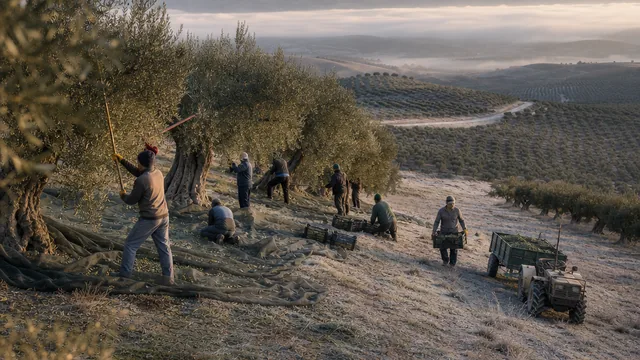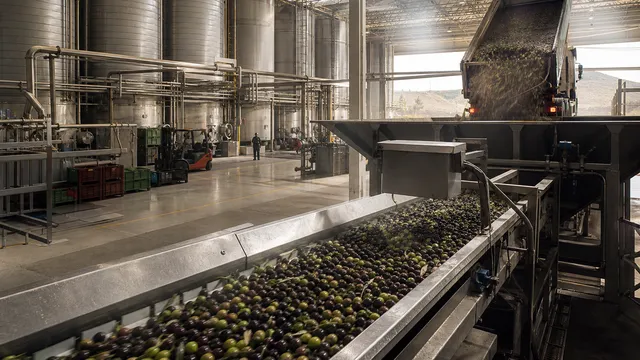
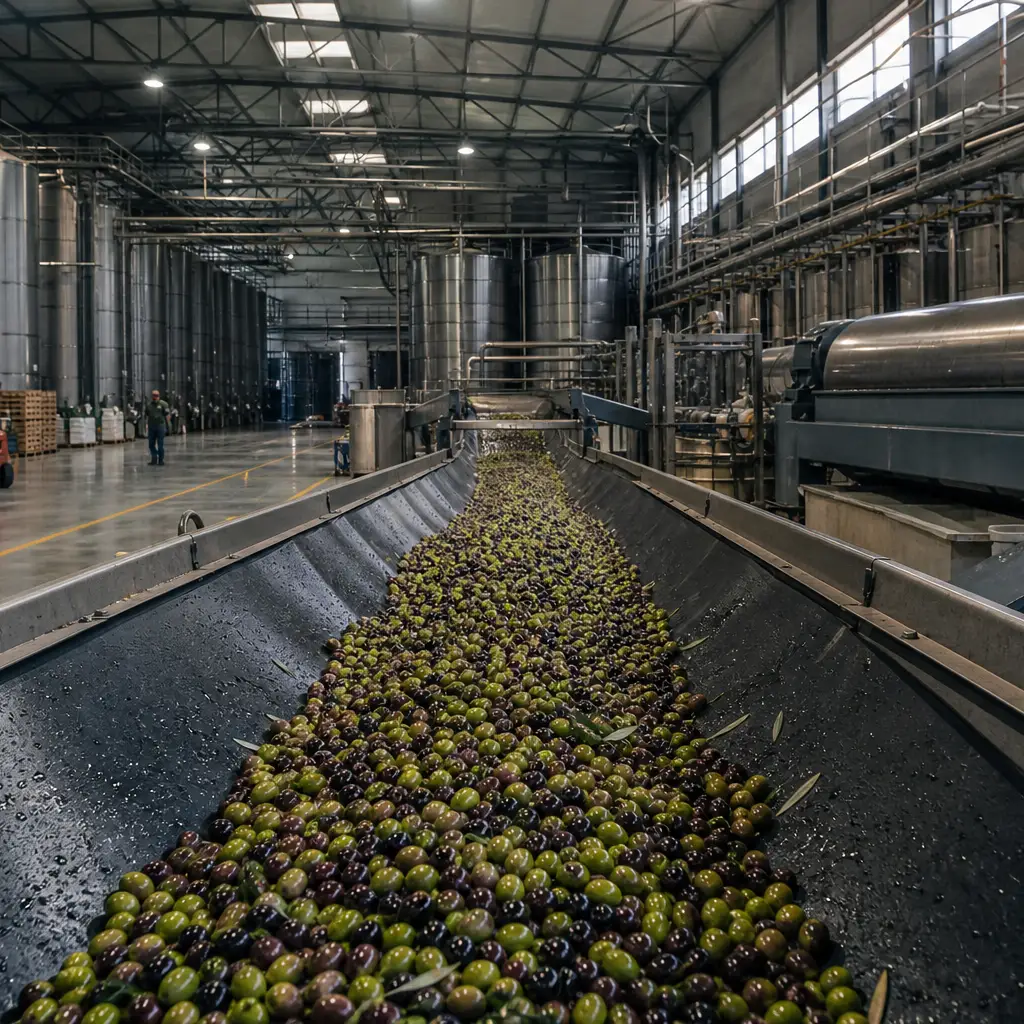
A trailer does not carry a single stage of ripeness. It carries a mixture: green, turning and black olives, from different parts of the tree and sometimes different plots. One number can help describe that mixture, while hiding differences that matter when making oil.
Our question is specific: can a camera help describe this distribution at reception? Olearia’s project is at TRL 3, proof of concept. We have worked with synthetic scenes and real public photographs. We have no mill pilot and no validated measurement of the full maturity index on a conveyor.
There is a reason for the knife
The traditional maturity index grades a sample of one hundred olives into eight categories, from 0 to 7, then calculates their weighted mean. Early categories distinguish exterior colour. For black-skinned olives, later categories distinguish how far pigmentation has spread through the flesh: observing that requires cutting the fruit.
An RGB camera sees the skin; it does not directly observe the flesh. Combining black olives into one exterior class cannot resolve categories 4–7. Our proposed workflow therefore combines skin observations with separate control cuts. The evaluation reference must come from another sample: using its cuts as both input and the correct answer would give a misleading accuracy estimate.
Nor is the index a universal harvest recipe. Cultivar, water, weather and extraction conditions change the relationship between colour, oil and phenolic compounds. Ripeness measurements support a decision; they do not determine the best harvest date by themselves.
The rest is for key holders
The background is open. We share the results, the figures and the full exam with the cooperatives, olive mills and research teams we work with.
Don't have a key? Ask us for one