
Farmer looking out over a valley of olive groves from the top of a hillside

Press room

Olive oil now has its data infrastructure

Olearia brings together in a single system what is today scattered across more than twenty public bodies: prices, climate, satellite, trade, pests and official registers. Three connected platforms, from the tree to the market, built in Granada for olive oil alone. Everything you need to report on it is here: quotable texts, figures with their sources, logos and real screenshots.

The Agritech demo is a sample farm logbook with Andalusian olive farms. We email you the link, no card needed. Try the demo

Updated on 6 October 2026

What Olearia is

Company description

May be reproduced verbatim.

Olearia is the data infrastructure of olive oil. Three connected platforms —Agritech for the grove, Digital Twins for the mill and Intelligence for the market— run on more than 30 million values that 39 automated processes collect from bodies such as the European Commission, the USDA, the FAO and the Andalusian regional government, linked to the land-parcel registers of Spain, Portugal, Italy and Greece. It is developed in Granada by AIXA Inteligencia Artificial.

The price of an olive oil season is set with information nobody holds in one place. It is spread across the European Commission's price series, USDA balance sheets, the Andalusian government's harvest forecasts, World Trade Organization tariffs, Copernicus imagery and the pest samplings of Andalusia's phytosanitary network. Large bottlers pay teams to cross-reference it; growers and cooperatives decide without it.

Olearia has built the layer that brings it together. Thirty-nine automated processes read some twenty public bodies every day, week or month and normalise them into a common model: twenty-six years of daily climate in 29 olive-growing districts across nine countries, olive oil trade for 203 countries since 2000, the tariffs of 154 economies and nearly 600,000 pest samplings on 6,200 Andalusian plots since 2003. That is over 30 million values today, and the figure rises every day.

Three platforms run on that foundation. Olearia Agritech takes the data to the plot: a field logbook with the electronic record mandatory from 2027, submission to SIEX, farm registration on the land-parcel registers of four countries, irrigation calculated with the FAO-56 method and pest risk using the official network's thresholds. Olearia Digital Twins reproduces the mill as a digital twin connected to SCADA, with batch traceability. Olearia Intelligence reads the market: prices, trade, climate and quantitative risk, with an assistant in seven languages. What is logged in the field, what happens at the mill and what moves the market are read in the same system.

The difference from existing farm software is verticality: generalist tools work for any crop and know nothing of the olive's phenology, pests or calendar. Olearia is a product of AIXA Inteligencia Artificial S.L., a Granada-based data engineering and applied AI company for the primary sector, based at El Carmen Innovation Hub of the Granada Provincial Council and at Breaker, the University of Granada's UGR Emprende centre, and backed by Wayra, Telefónica's innovation network.

Figures

Every number, with its source

Measured directly on the platform's database, not estimated. A “value” is each numeric data item stored —a price, a temperature, a count—, excluding identifiers and dates. The figures grow every day with automatic ingestion: they are a floor, not a ceiling. The savings estimates on the product pages are our own calculation models, not results measured on farms, so they do not appear here.

measured data values
+30M
Numeric values across the 73 tables of Olearia Intelligence: 2.3 million records, growing every day
automated ingestion processes
39
Daily to yearly, across some twenty public bodies: from the European Commission and the USDA to the Andalusian regional government
olive pest samplings
+590.000
Andalusia's Phytosanitary Alert and Information Network (RAIF): 6,200 plots in 8 provinces since 2003
countries in the trade flows
203
UN Comtrade and Eurostat, from 2000 to 2025
olive-growing districts with daily climate
29
Across 9 producing countries since 2000: temperature, rainfall, evapotranspiration and soil moisture
economies with their olive oil tariffs
154
World Trade Organization: MFN and preferential tariffs

Integrated data sources

  • Comisión Europea
  • Eurostat
  • Copernicus
  • Consejo Oleícola Internacional
  • FAO
  • Banco Mundial
  • FRED · Reserva Federal de St. Louis

Also: USDA, UN Comtrade, World Trade Organization, International Monetary Fund, OECD, European Central Bank, Bank for International Settlements, the EU Joint Research Centre, Spain's Ministry of Agriculture (MAPA and AICA), Spain's Ministry for the Ecological Transition, the Andalusian government (RAIF and harvest forecasts) and the International Olive Council. In the field, Agritech also connects to SIEX and FEGA, SIGPAC and the Spanish Cadastre, and the land-parcel registers of Portugal, Italy and Greece.

Backing

Institutional backing

Olearia is a product of AIXA Inteligencia Artificial S.L., based at El Carmen Innovation Hub of the Granada Provincial Council and at Breaker, the University of Granada's UGR Emprende centre.

  • Wayra · Telefónica Corporate innovation programme
  • Diputación de Granada Institutional support
  • UGR Emprende University of Granada
  • Andalucía Agrotech DIH European Digital Innovation Hub
  • El Carmen Innovation Hub Incubator · Granada Provincial Council
  • Node Hub Accelerator Accelerator

Products

The three platforms

The farm management layer · Available

Olearia Agritech

The olive grove's field logbook, connected to the official registers. It works without coverage on the plot and covers both upcoming obligations: the electronic plant-protection record from 2027 and the full digital logbook with the next CAP, expected in 2028.

  • Log an operation in under a minute, offline too
  • Submission to SIEX and direct checks against the Ministry of Agriculture registers (ROMA, ROPO)
  • Farm registration on SIGPAC and the Cadastre in Spain, and on the land-parcel registers of Portugal, Italy and Greece
  • Eight Sentinel-2 vegetation indices per plot every five days
  • Olive fly, prays and peacock spot risk using the official phytosanitary network's thresholds and degree-day models
  • Irrigation calculated with the FAO-56 Penman-Monteith method and carbon footprint with IPCC methodology
See the platform
The market intelligence layer · Available

Olearia Intelligence

The olive oil market read in a single system: prices, climate, harvest, international trade and macroeconomic variables, normalised from some twenty public bodies.

  • 39 automated ingestion processes, from daily to yearly
  • Daily climate since 2000 in 29 olive-growing districts across nine countries
  • Olive oil trade for 203 countries and tariffs for 154 economies
  • Weekly satellite coverage of the main producing areas
  • Quantitative risk analysis: VaR, Monte Carlo and stress tests
  • Conversational assistant in seven languages and a directory of over 4,000 sector companies
See the platform
The industrial control layer · Available

Olearia Digital Twins

The mill reproduced as a digital twin that simulates the physical process, from olive reception to the tank, with live supervision and traceability for certification.

  • Navigable 3D model of the facility
  • Process supervision connected to SCADA
  • Reception, multi-batch milling and production scheduling
  • Vibration monitoring, equipment health and prioritised alarms
  • Batch traceability geared to IFS, BRC, PDO and PGI
See the platform

Context

Two dates that are not the same

People talk about the “mandatory digital logbook” as if it were a single rule with a single date. There are two, and they affect very different numbers of farms. It is worth not mixing them up.

  1. 1 January 2027

    Electronic recording of plant-protection treatments

    Paper stops being valid for plant-protection products across Spain and the whole European Union. It is the first deadline with real consequences.

    Implementing Regulation (EU) 2025/2203 and Royal Decree 1039/2025

  2. Next CAP (expected in 2028)

    Full use of the digital logbook

    Mandatory for every entry (plant protection, soil nutrition, irrigation, field work and CAP interventions) on farms with more than 30 ha, more than 5 ha of irrigated land or more than 0.1 ha of greenhouses. Voluntary for everyone else.

    Royal Decree 1054/2022 (final provision 8), amended by Royal Decree 34/2025

The calendar has moved more than once, which explains much of the confusion in the sector: in November 2025 the European Commission allowed member states to keep paper throughout 2026, and Spain took up that flexibility. That is why many growers believe the obligation has already passed, or has been postponed indefinitely. Neither is true: 2026 is the preparation year, 2027 the first real deadline.

Sources: Implementing Regulation (EU) 2025/2203 of 31 October; Royal Decree 1039/2025 of 19 November; Royal Decree 34/2025 of 21 January (BOE-A-2025-998); Royal Decree 1054/2022 of 27 December. Detailed analysis in our digital logbook guide (in Spanish)

Downloads

Downloadable material

Brand usage rules

  • The brand is written “Olearia”. The products are “Olearia Agritech”, “Olearia Intelligence” and “Olearia Digital Twins” — in normal case, never “AgriTech” or all capitals.
  • The logo is never redrawn, distorted or recoloured. On dark backgrounds use the white version; on light backgrounds, the real dark version, never the white one inverted by software.
  • Use the SVG whenever your tool accepts it: it scales without loss from a favicon to a billboard. The PNGs, up to 4000 px, are for tools that don't accept vectors.
  • Minimum clear space around the logo: the width of the “O” in Olearia on every side.
  • Product screenshots show real platform data at the moment they were taken. They may be reproduced with the credit “Image: Olearia”.
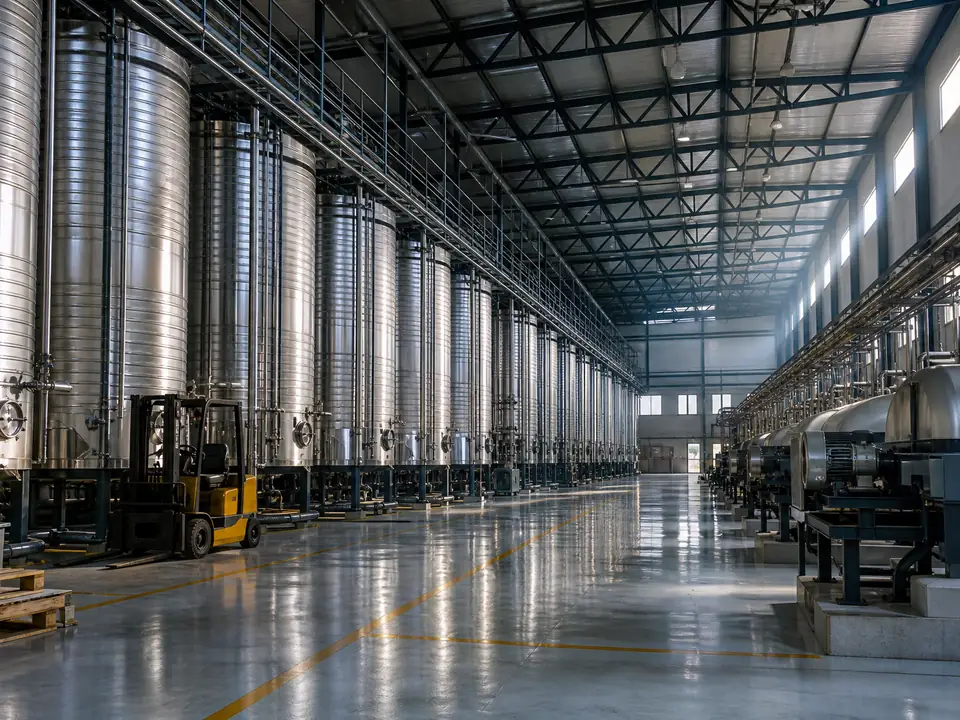
  • The brand imagery of groves and mills is generated with artificial intelligence from our own art direction: it is editorial illustration, not documentary photography. Credit: “Image: Olearia (AI-generated)”. The people in Olearia's campaigns are fictional.

Media

Media contact

For interviews, specific data, product demos or material that isn't here.

info@olearia.io

AIXA Inteligencia Artificial S.L. · Tax ID B22487086
El Carmen Innovation Hub · Av. de Andalucía 92 · 18014 Granada, Spain
We usually reply within 24 working hours.

Viento del pueblo · 1937

Aceituneros

Miguel Hernández

Andaluces de Jaén,
aceituneros altivos,
decidme en el alma: ¿quién,
quién levantó los olivos?

No los levantó la nada,
ni el dinero, ni el señor,
sino la tierra callada,
el trabajo y el sudor.

Unidos al agua pura
y a los planetas unidos,
los tres dieron la hermosura
de los troncos retorcidos.

Levántate, olivo cano,
dijeron al pie del viento.
Y el olivo alzó una mano
poderosa de cimiento.

Andaluces de Jaén,
aceituneros altivos,
decidme en el alma, ¿quién
amamantó los olivos?

Vuestra sangre, vuestra vida,
no la del explotador
que se enriqueció en la herida
generosa de sudor.

No la del terrateniente
que os sepultó en la pobreza,
que os pisoteó la frente,
que os redujo la cabeza.

Árboles que vuestro afán
consagró al centro del día
eran principio de un pan
que sólo el otro comía.

¡Cuántos siglos de aceituna,
los pies y las manos presos,
sol a sol y luna a luna,
pesan sobre vuestros huesos!

Andaluces de Jaén,
aceituneros altivos,
pregunta mi alma: ¿de quién,
de quién son estos olivos?

Jaén, levántate brava
sobre tus piedras lunares,
no vayas a ser esclava
con todos tus olivares.

Dentro de la claridad
del aceite y sus aromas,
indican tu libertad
la libertad de las lomas.

Tell us

Building the future of olive oil, together.

Type